
This report, for example, tells the story of how the collaboration between Con Corazón and El Tucan came about. Incidentally, this Fair Trade company is also celebrating its anniversary this year – its 35th. And the partnership has now lasted for 10 years. In an interview, Fabio Höltschi shared a lot about the development, life on site, and about El Tucan, which was founded in 1990 by his parents, Peter and Brigitte.
Knitters
How It All Began
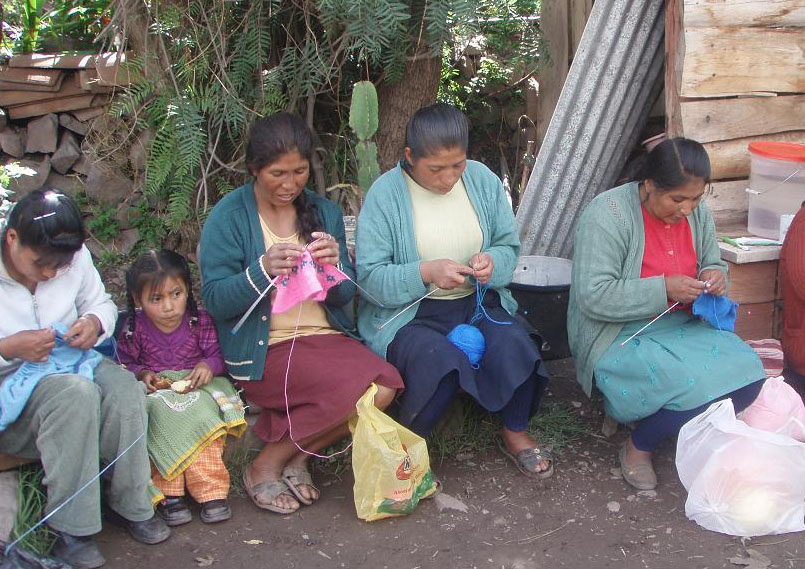
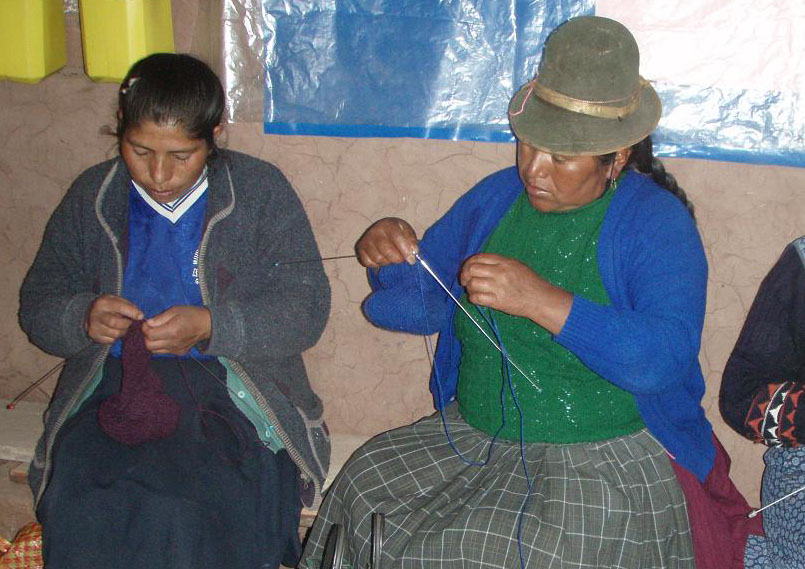
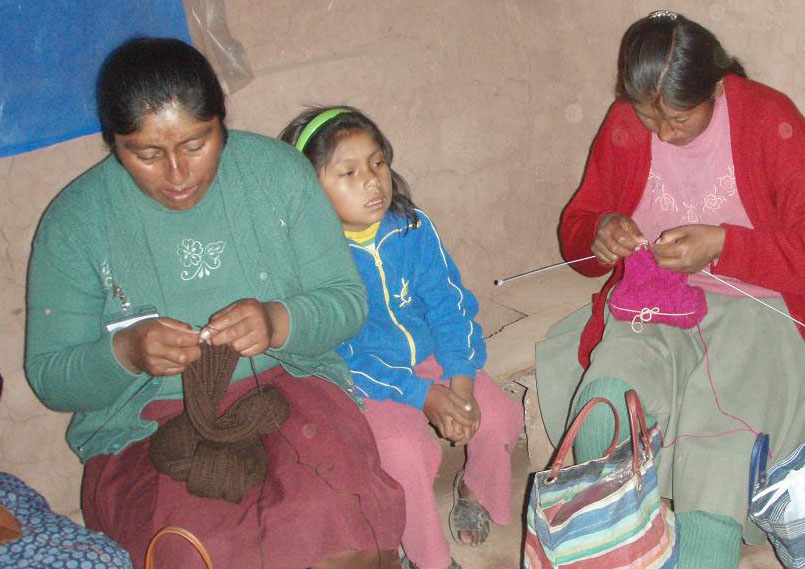
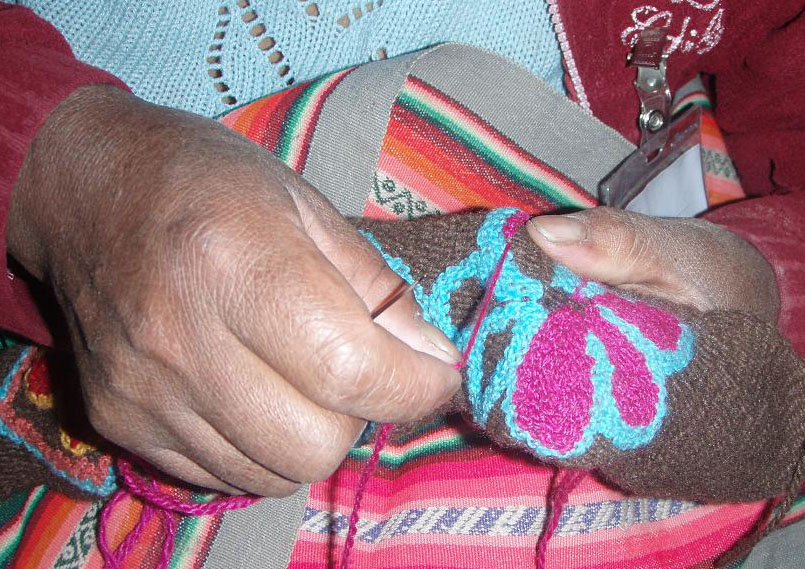
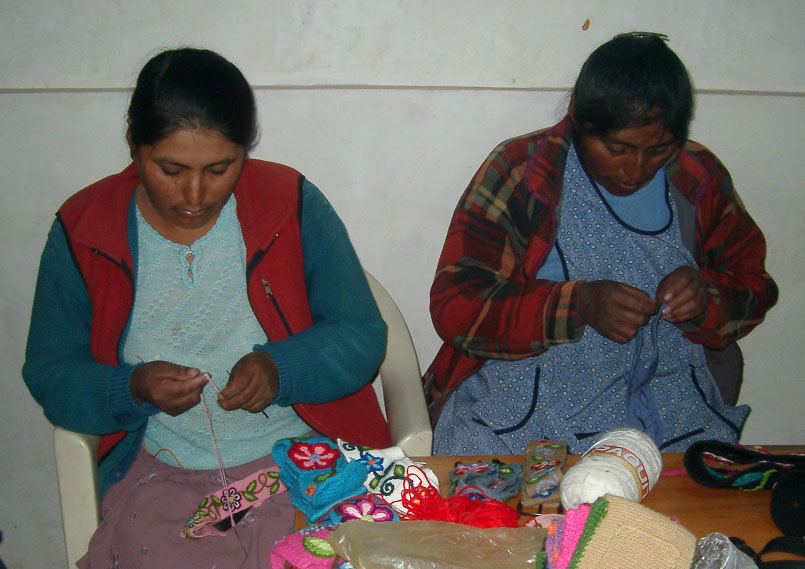
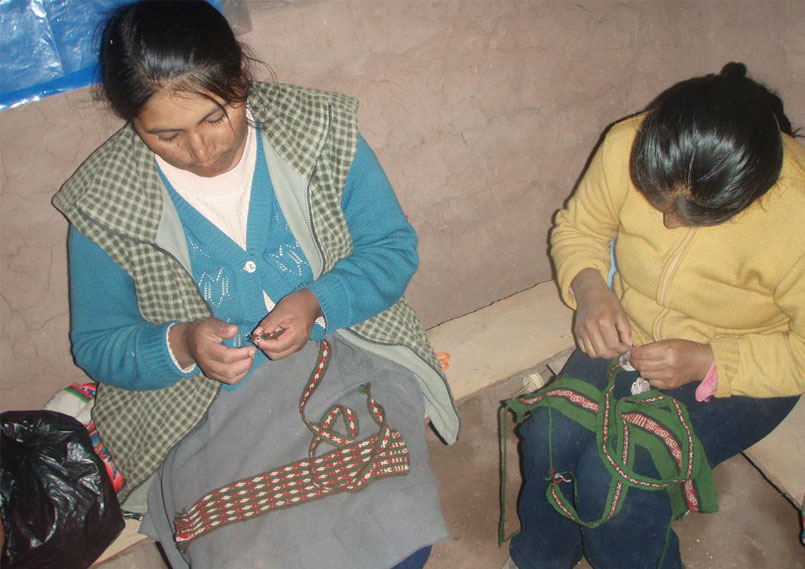
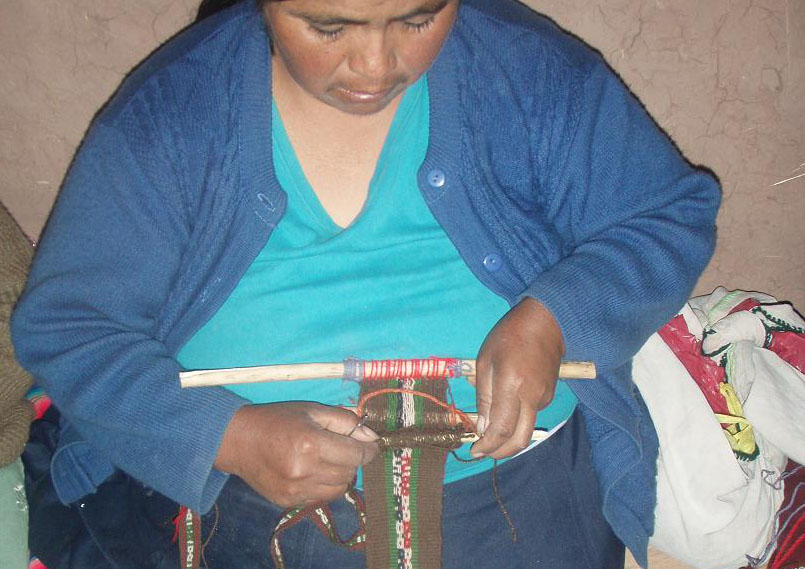
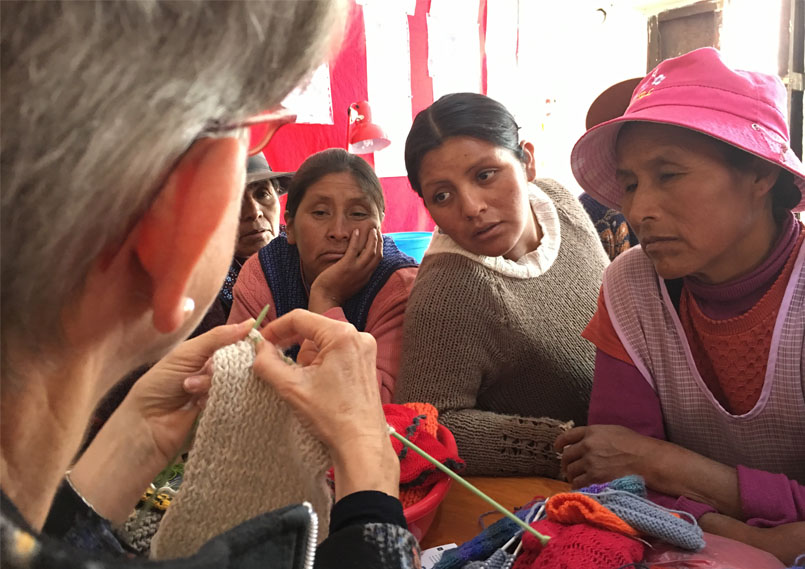
Fifteen years ago, at the founding of Con Corazón, the first hand-knitted items were created. It was a case of “helping people to help themselves.” Under the guidance of Doña Katharina (Katharina Turkier), the mothers learned to knit and crochet
However, it quickly became clear that 20 stitches and 20 rows looked different for everyone. So Doña Katharina introduced the knitting sample. She showed the knitters how to compensate for differences, for example by using thicker or thinner needles. The knotting sample became the foundation for calculating new, marketable accessories. The first pot holders were made and were initially sold independently in Switzerland.
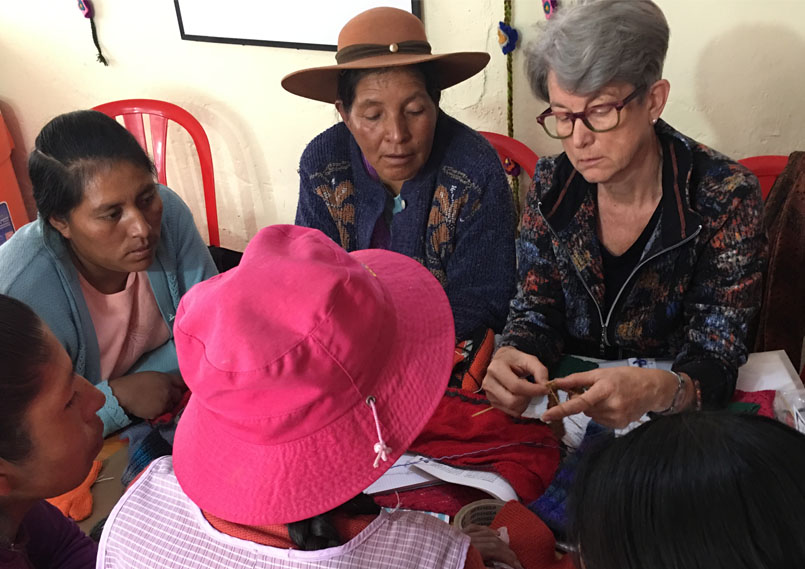
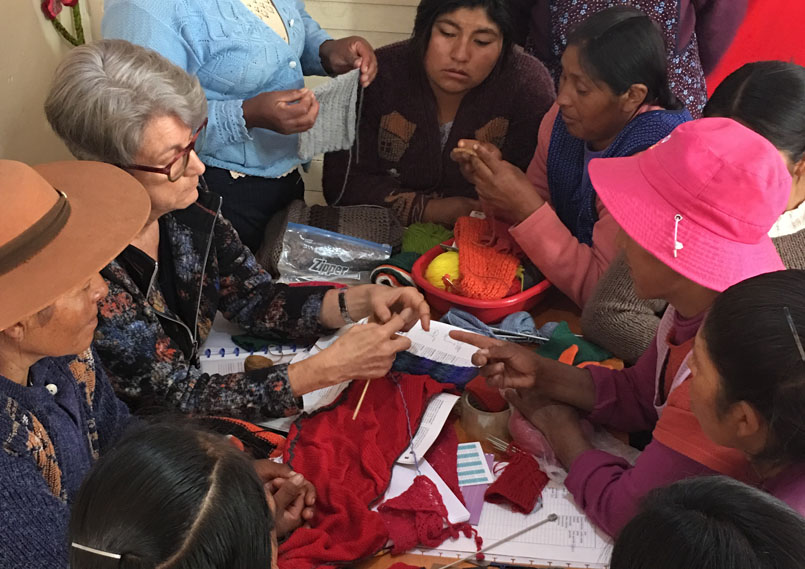
Workshop
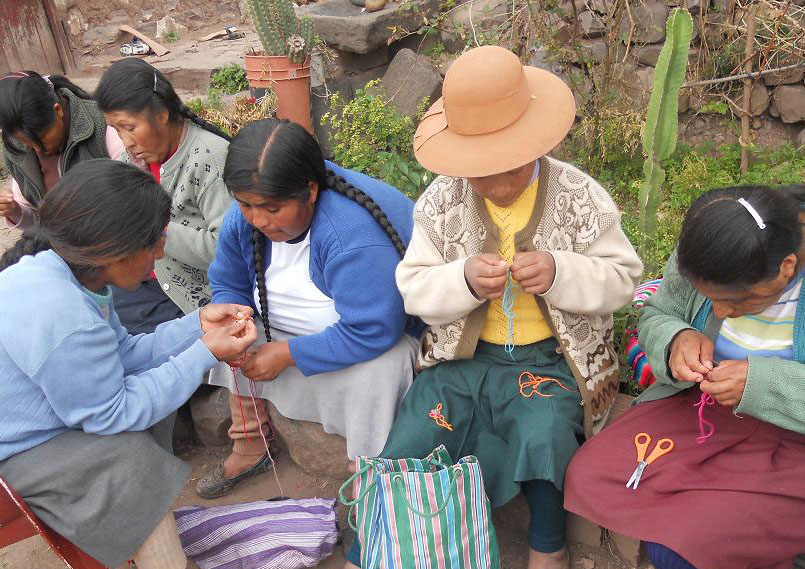
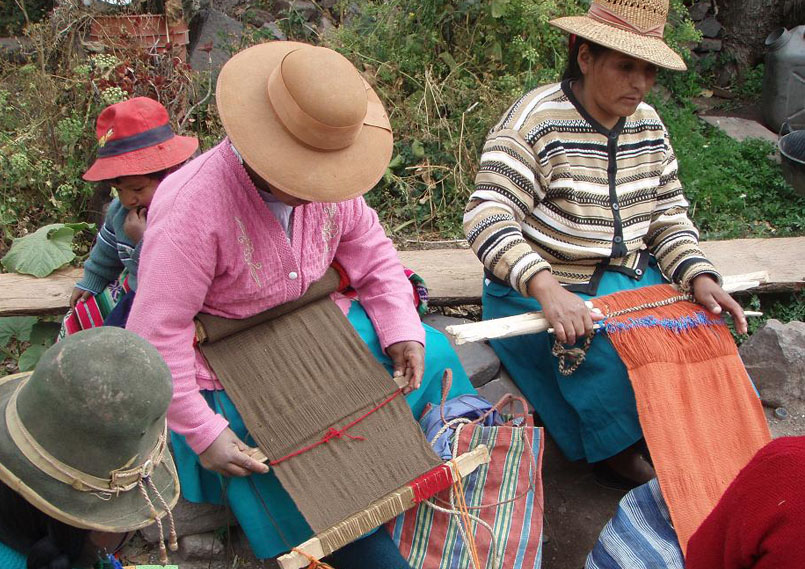
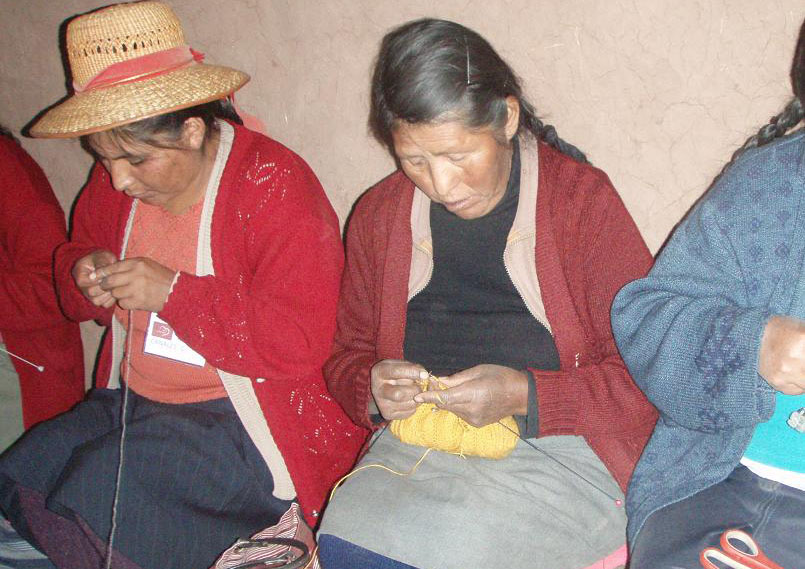
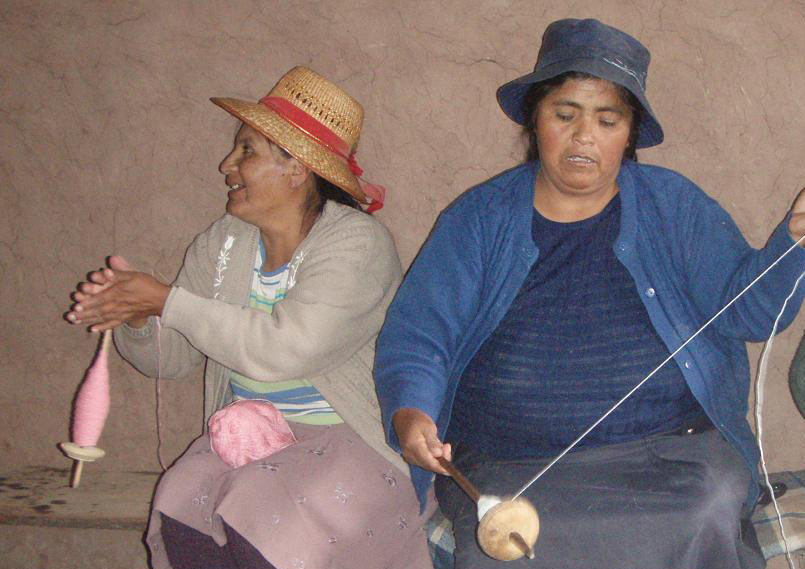
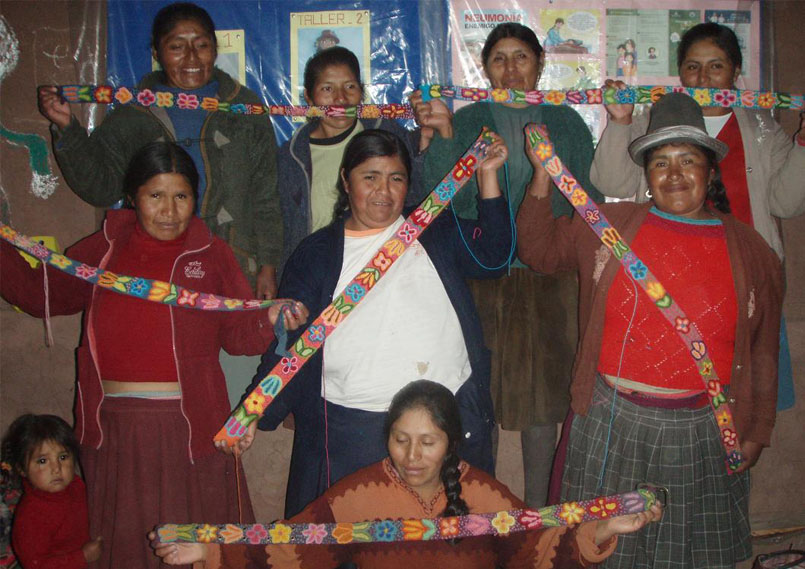
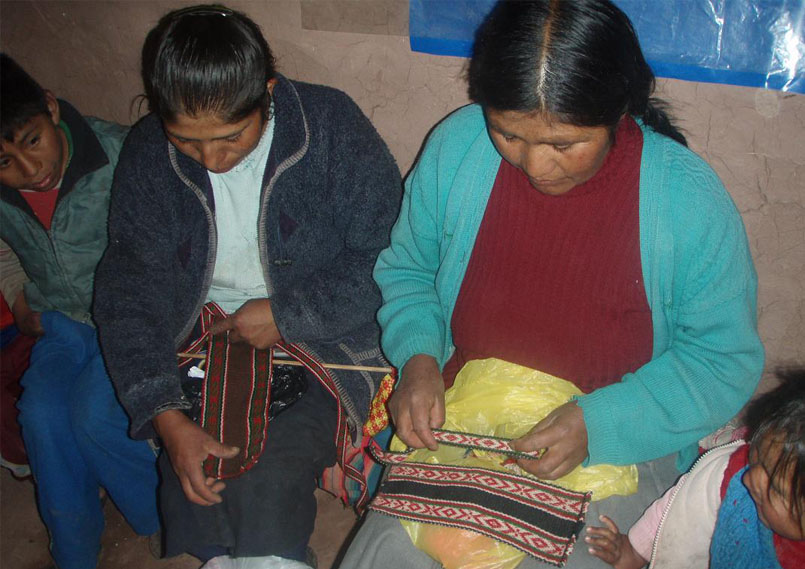
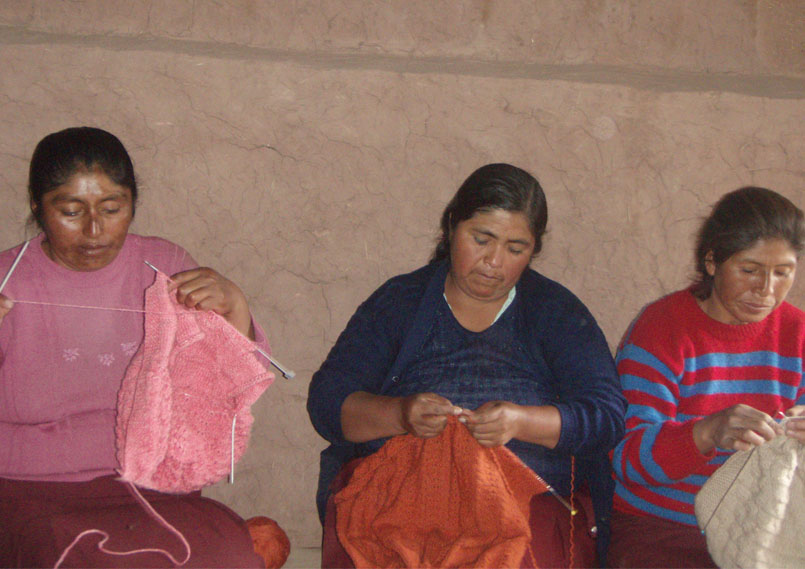
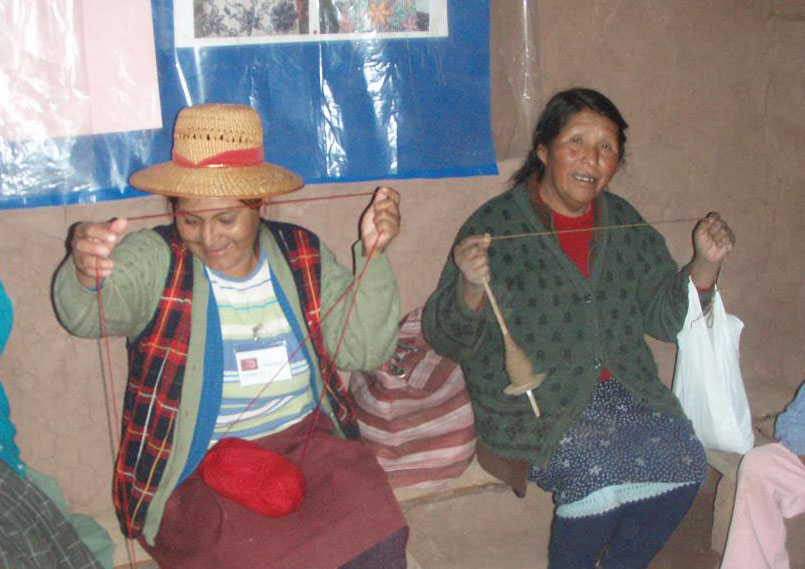
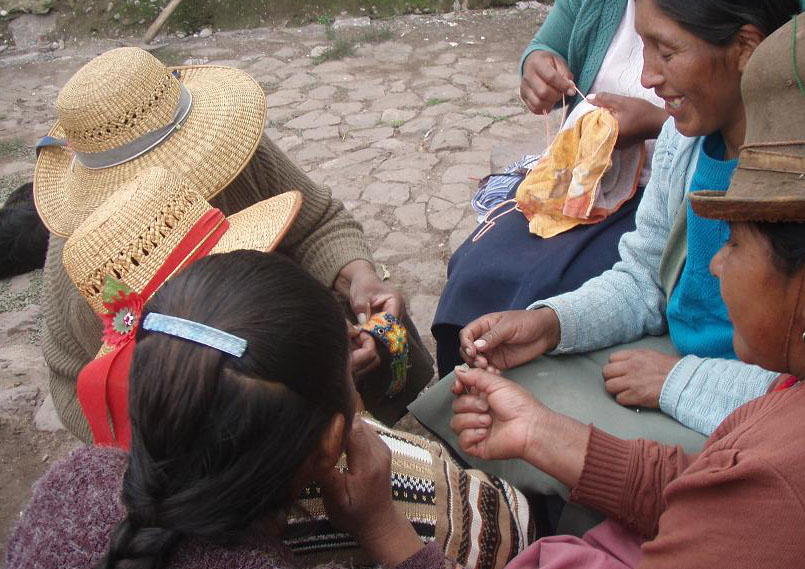
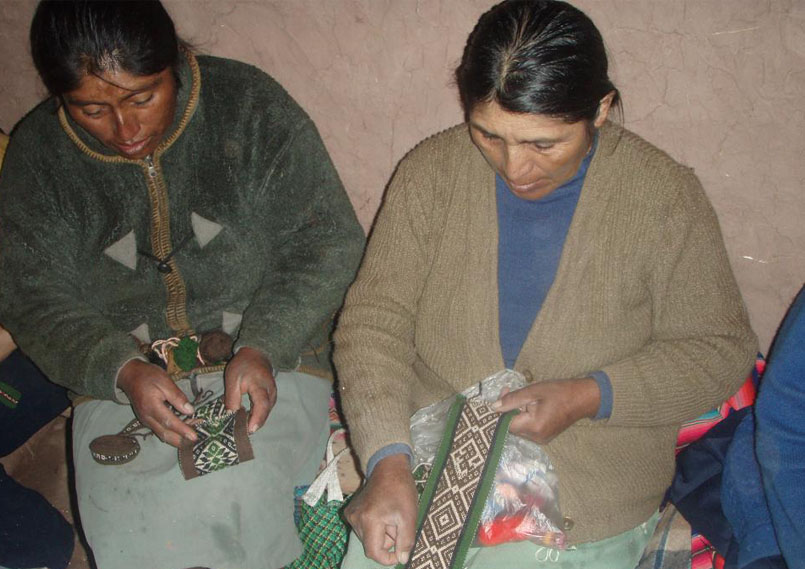
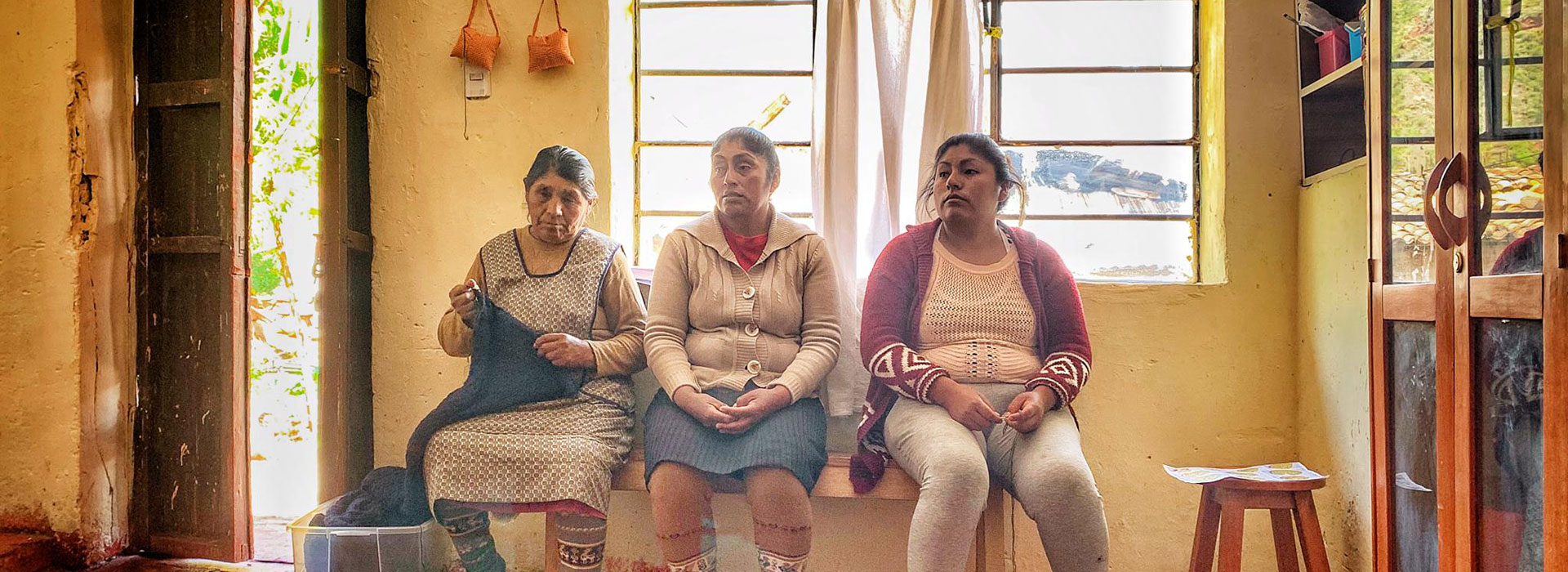
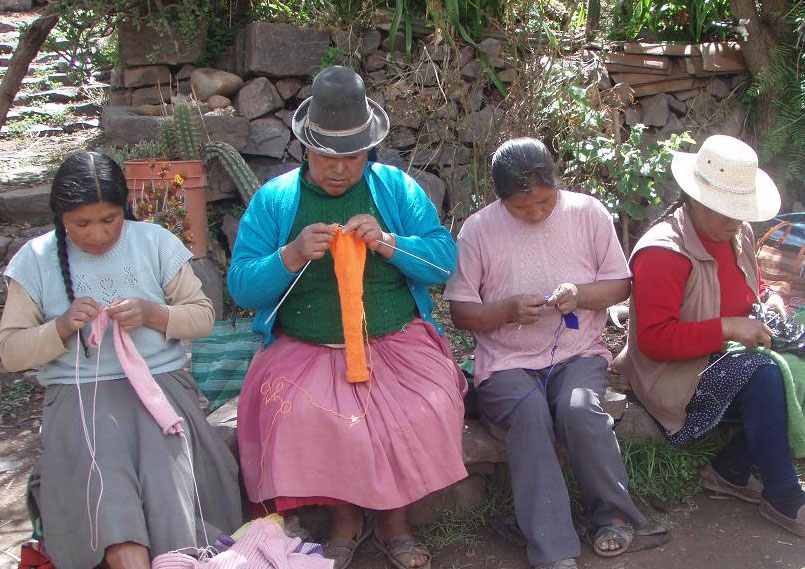
Currently, five women work for Con Corazón, although the number fluctuates depending on the order volume. They knit in the production facility in Piñipampa. There, they enjoy a relaxed, cheerful, yet focused working environment. All of them are career changers. Tools are available in the form of knitting and crochet needles, knitting machines, and, of course, the raw material: alpaca wool. Occasionally, the women also work from home – depending on what suits them better. This allows existing family structures to remain intact.
Working at Con Corazón is very popular and sought-after. The women earn above the standard rate, with reliable wage payments. There are no plans to expand the team. Any further development must happen organically to ensure sustainability. Products must also find buyers. Team dynamics could be disrupted if the workshop were to grow excessively. Growth must be manageable – not growth for growth’s sake.
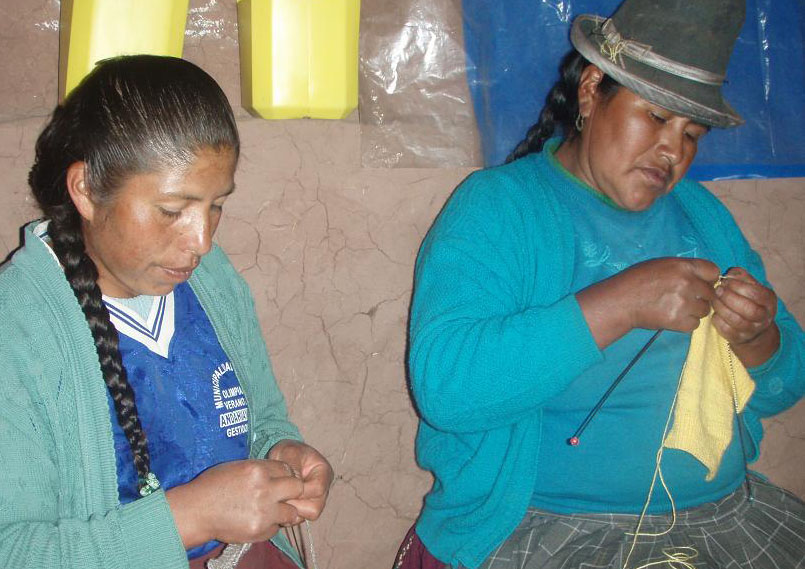
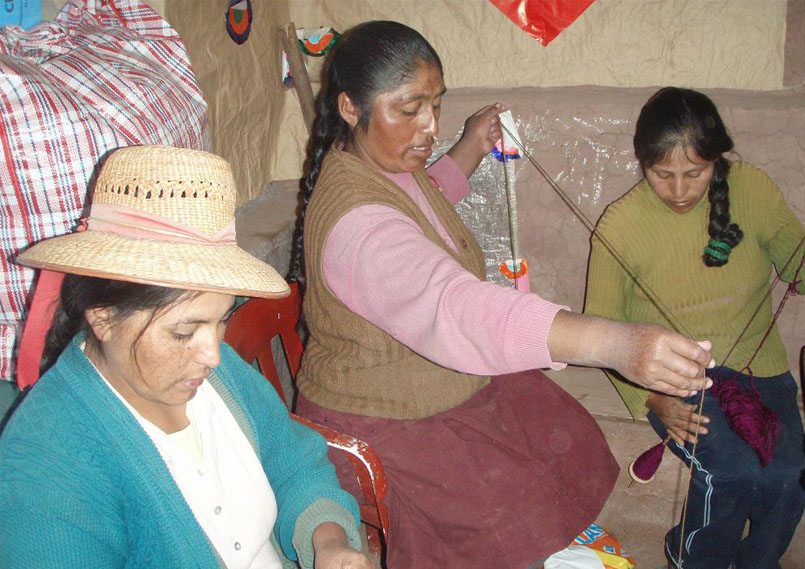
Industrialization «light»
Even in the Andes, “industrialization” hasn’t come to a halt – knitting machines were quickly acquired. Fabio Höltschi from El Tucan, a knitwear expert, teaches the women how to use the new equipment. He shares his extensive knowledge, shows them little tricks, and discusses patterns and colors with them. With practice and learning, the mothers quickly see their progress – and joy grows! Personal successes are mutually appreciated.
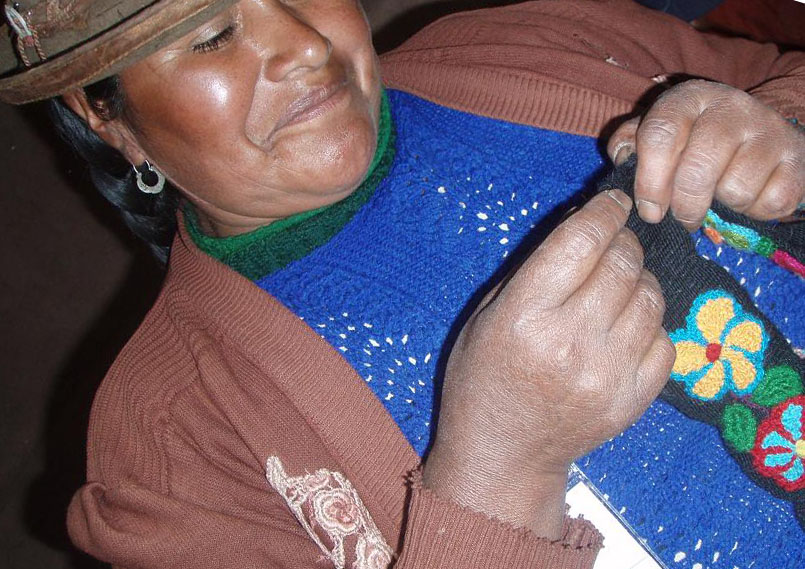
Today, the focus is mainly on accessories in various designs such as wrist warmers, caps, scarves, as well as simple garments.
Corona Break
The break in the regular visits due to the pandemic made it especially interesting to observe the development. El Tucan noticed significant progress. On one hand, there has been a slow professionalization and structuring of work processes, and on the other, improvement in collaboration. Previously, all knitting was done by hand, there was no quality control, and continuity was difficult. So, optimization became essential. Unlike before, the knitters can now produce many more caps, thanks to their skill and practice. The mothers experience a sense of achievement – and that makes them very proud.
Design
Latin America uses a different color palette compared to Europe – but it works all the same. The women are open to suggested and requested color combinations. In turn, we Europeans are also drawn to colorful pieces, which offer a sense of vitality in winter. Stereotypes are meant to be overcome.
The women are open to new products – currently, for example, simple garments. From a technical standpoint, these pose challenges. They recognize these challenges themselves. But when the details are explained, they begin to understand. Overall, they are eager to learn and want to progress.
When Fabio wants to introduce a new product, he simplifies it to match their skill level or sends a sample. The women in Peru then provide feedback on how they perceive it and how they could produce it. Ideas also come from Peru – the collaboration works well. New opportunities and perspectives are opening. Confidence is growing steadily – independent action is gently encouraged and nurtured through the question: “How do we get there?”
Material Alpaca
The women work exclusively with alpaca wool. Alpacas live throughout the Andes region—around 80% in Peru, Argentina, and Chile.
El Tucan has been importing alpaca wool since 1989, making it one of the oldest providers of alpaca knitwear in Switzerland. The Höltschi family has built a close relationship with the producers and quickly realized the importance of collaborating with the two existing alpaca spinning mills. They even develop yarn according to their own ideas and preferences. In Cusco, there are also two shops where Con Corazón can purchase small amounts of wool directly. El Tucan handles the pre-financing. In this way, they also take on social responsibility, something that became particularly evident during the pandemic. El Tucan anticipated the situation, and the mothers continued to produce even when there was no demand from El Tucan.
Marketing
By now, the women understand that, as producers, they need to respond to customer preferences and that sales success is tied to this. With good sales revenue, the mothers can afford better schooling for their children—which motivates them greatly. Some are even able to purchase their first cooking stove. They know: if I produce more and save a little, I can afford something. They are joyful—the collaboration is working well.
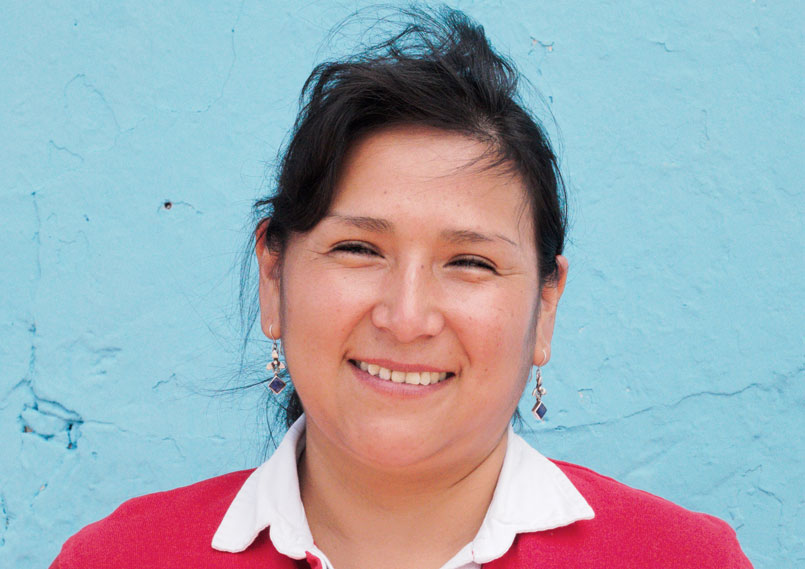
El Tucan maintains weekly phone contact. Ana, a founding member and originally responsible for the organization, is now the key link between the mothers and El Tucan as well as Con Corazón.
El Tucan – On Track for 35 Years!
The knitting sample, which was the foundation for the knitters in Piñipampa, also symbolically represents the development work of El Tucan and its collaboration with Con Corazón. To build a long-term and sustainable partnership, it’s important to break down complex issues to the basics and the essentials. This enables the creation of a shared product—on equal footing and with mutual understanding.
Who’s Behind It
El Tucan was founded in 1990 by Peter Höltschi and his wife Brigitte. From the very beginning, the focus was on direct exchange with producers. In the meantime, the second generation of the Höltschi family has also joined the company. The number of employees has grown significantly in the various countries. In this sense, El Tucan acts as a bridge-builder, giving producers direct access to the Swiss market without going through intermediaries.
Since its inception, the Höltschi family business has put into practice what corporate responsibility initiatives and supply chain laws now demand: honest dealings with all involved. They place great value on fair compensation for producers and ensure that direct cooperation results in greater local value creation.
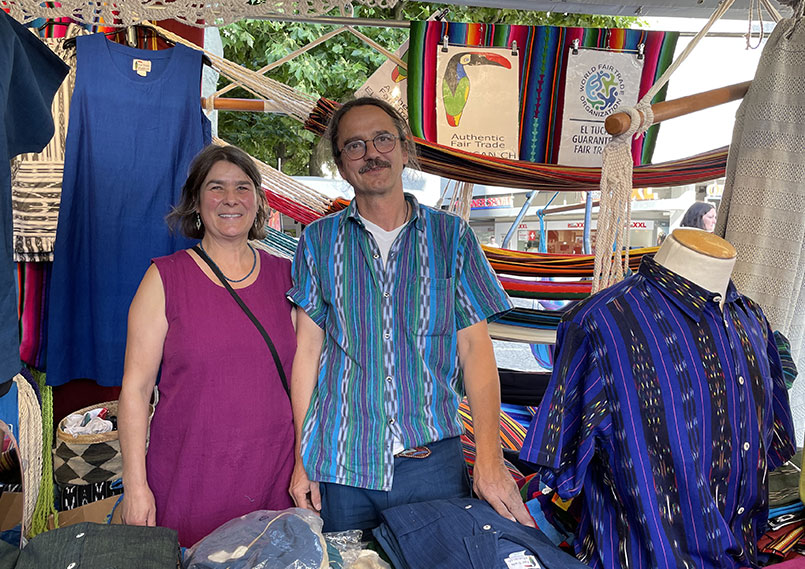
While Con Corazón focuses on social engagement, El Tucan is committed to the economic side—since no middlemen are involved, everyone benefits: The knitters receive higher wages, El Tucan produces unique products, and customers enjoy fair prices. A win-win for all!
Fair Trade
Fair Trade products were originally purchased by idealists. It didn’t matter, for example, how the coffee tasted. What mattered was the intention to do good and to purchase products at fair prices. Since then, customer needs have evolved. What was once considered a “nice to have” is now, fortunately, more widely understood as essential—true sustainability and meaning only arise through cooperation.
El Tucan works with women in Guatemala, Bolivia, and Peru—primarily producing clothing. In Mexico, the popular hamacas (hammocks) are made. The Höltschi family visits the production sites once or twice a year. The collaboration with Con Corazón began exactly 10 years ago! Danièle Turkier sent an email to El Tucan. Coincidentally, Peter Höltschi was in Peru at the time and visited the workshop in Cusco. Destiny?
Today, El Tucan is responsible for product development, design, and coordination in the textile sector, as well as the sales of the beautiful knitwear. These items can be purchased at markets, primarily in the Swiss midlands (Aarau, Bern, Biel, Jura, Valais, etc.) and via the webshop.
Culture in the Andes
Family Life
In rural areas around Cusco, Peru, very traditional family structures still prevail. Living conditions vary greatly. Many men work in the informal sector—for example, extracting clay from mountain streams or producing clay bricks. It's a scene reminiscent of the pre-industrial era, including the presence of child labor.
Europeans often think that South Americans are very open and willing to share their homes. However, aside from two exceptions, Fabio has never been inside someone’s home. A Peruvian home is seen as a very private space, not something to be casually shared. So when a Peruvian woman invites someone into her home, it’s something very special.
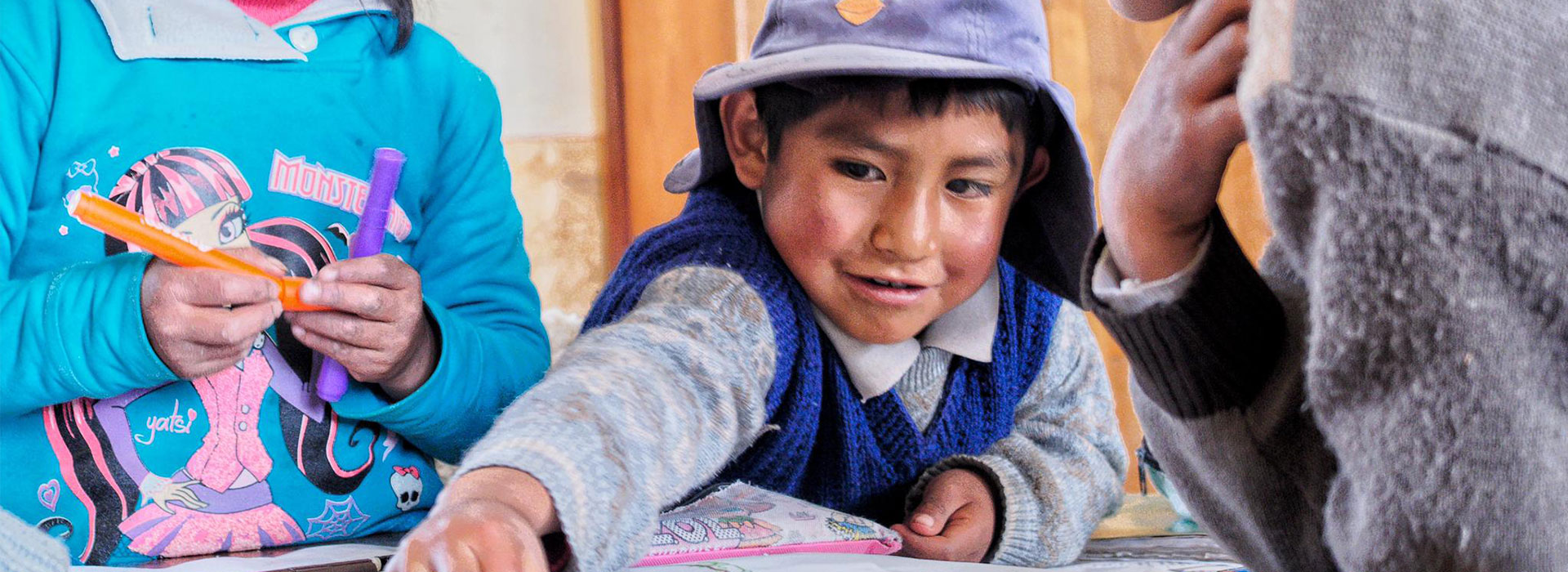
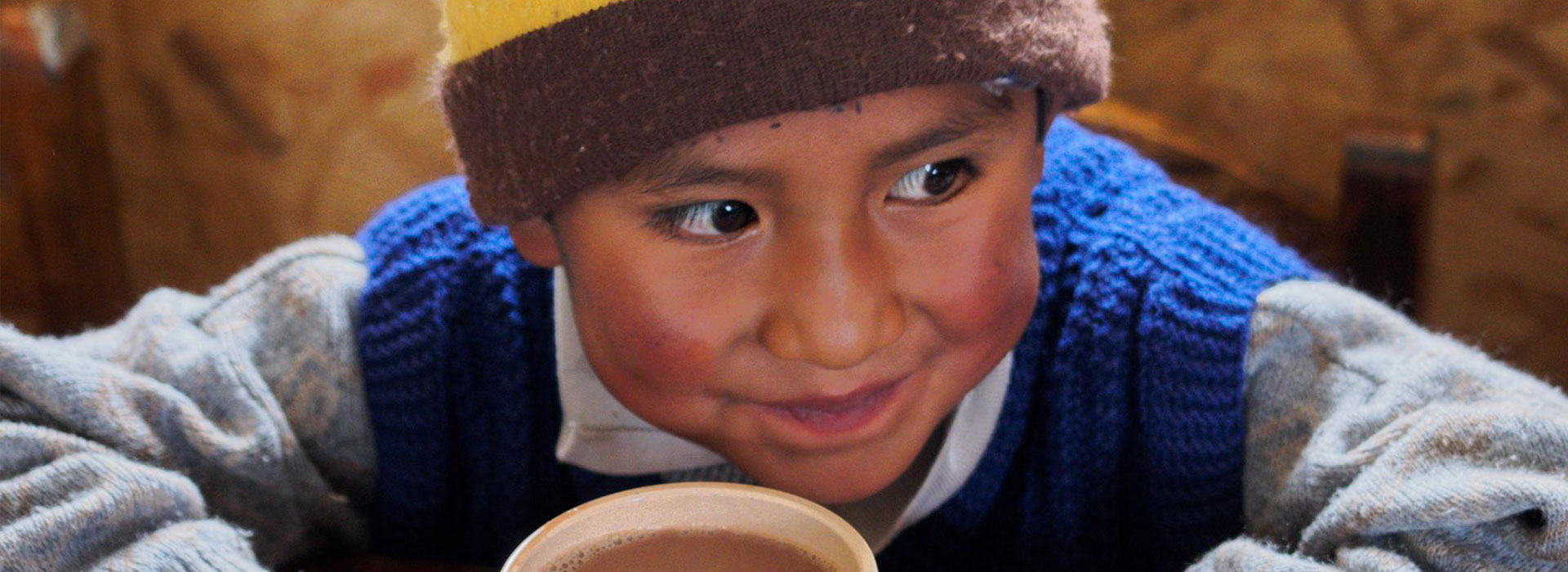
The division of labor between men and women remains traditional. The woman is responsible for the family’s well-being and only leaves the house once everything at home is taken care of. Children attend school and are provided with meals there—this is the window of time when mothers can work, typically part-time. The men often lack steady employment. Alcoholism is an issue, as it is in many poorer regions. Children are the heart of the family—and its future.
Near urban areas, many single mothers live independently. They flee rural life in search of work and hope to earn their own income—for themselves and their children.
July 2025